









Introduction
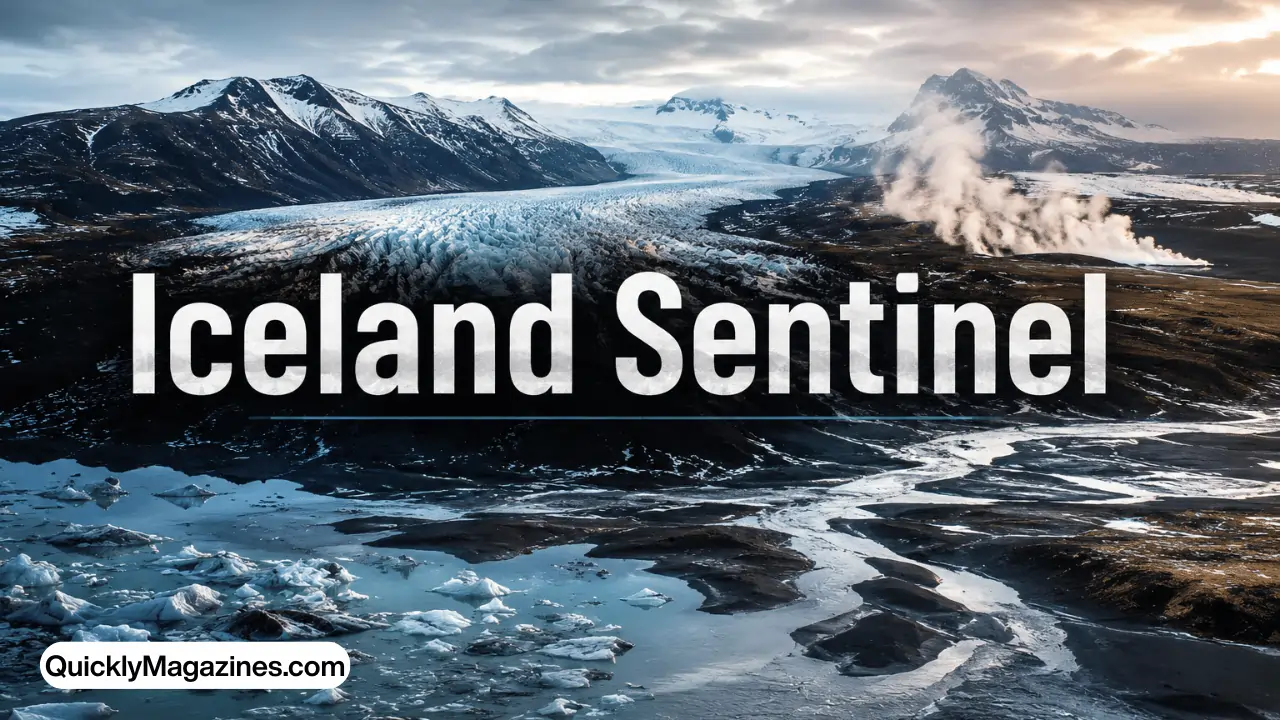
Iceland is one of the most environmentally active regions in the world. The country is known for massive glaciers, volcanic eruptions, geothermal activity, black sand beaches, and dramatic mountain landscapes. Because of these unique natural features, scientists closely monitor Iceland to study climate change, geological activity, and environmental transformation.
The term “iceland sentinel” has become increasingly important in environmental science because it refers to the use of Sentinel satellite technology for monitoring Iceland’s changing conditions from space. These satellites help researchers observe glacier movement, volcanic activity, rising temperatures, and landscape changes with remarkable accuracy.
Modern satellite observation has transformed the way experts collect environmental data. Instead of relying only on ground-based research, scientists can now monitor large regions of Iceland continuously through advanced imaging systems. The role of iceland sentinel technology continues to grow as climate concerns and environmental challenges increase worldwide.
What Is Iceland Sentinel?
The phrase “iceland sentinel” is commonly connected to the Sentinel satellites used within Europe’s Copernicus Earth observation program. These satellites are designed to monitor different environmental conditions across the planet, including weather systems, glaciers, oceans, forests, and geological activity.
Iceland is one of the most important regions observed by Sentinel satellites because its landscape changes rapidly due to volcanic eruptions and climate shifts. Scientists use satellite data to analyze environmental patterns and understand how natural systems are evolving over time.
The iceland sentinel system supports research in several important areas:
Glacier Monitoring
Scientists track glacier movement, melting speed, and ice thickness.
Volcanic Observation
Satellite imaging helps detect underground volcanic activity and land deformation.
Climate Change Research
Researchers study how rising temperatures affect Iceland’s environment.
Natural Hazard Detection
Satellite systems help identify landslides, flooding risks, and coastal changes.
The growing use of iceland sentinel technology allows experts to gather reliable information from remote locations where traditional monitoring can be difficult.
Why Iceland Is Important for Environmental Studies
Iceland’s location near the Arctic Circle makes it highly sensitive to climate change. Temperature increases in Arctic regions often happen faster than in other parts of the world, which directly affects Iceland’s glaciers and ecosystems.
The country contains some of Europe’s largest glaciers, including Vatnajökull, Langjökull, and Hofsjökull. Many of these glaciers have been shrinking steadily due to warmer temperatures. Scientists consider Iceland an important indicator of global climate trends because environmental changes there can reflect larger planetary shifts.
In addition to glaciers, Iceland experiences frequent volcanic activity. The country sits on the Mid-Atlantic Ridge, where tectonic plates continuously move and interact. This geological position creates regular earthquakes and volcanic eruptions.
Because of these conditions, iceland sentinel monitoring systems provide valuable scientific data for researchers around the world.
How Sentinel-1 Supports Iceland Sentinel Monitoring
Sentinel-1 is one of the most important satellites used in iceland sentinel environmental observation. This satellite uses radar imaging technology to study Earth’s surface under nearly all weather conditions.
Unlike ordinary optical cameras, radar systems can capture data through clouds, storms, and darkness. This feature is especially useful in Iceland because the country often experiences cloudy weather and long winter nights.
Main Uses of Sentinel-1 in Iceland
Glacier Movement Analysis
Scientists use radar imaging to measure how quickly glaciers move and shrink over time.
Volcano Detection
Ground deformation around volcanoes can indicate rising magma activity before eruptions occur.
Landslide Monitoring
Satellite radar helps detect unstable mountain areas and terrain movement.
Coastal Observation
Researchers monitor coastal erosion and environmental changes caused by rising sea levels.
The use of Sentinel-1 in iceland sentinel operations has significantly improved the accuracy of environmental monitoring across Iceland.
The Role of Sentinel-2 in Iceland
Sentinel-2 is another major satellite connected to iceland sentinel research. Unlike Sentinel-1, Sentinel-2 uses high-resolution optical imaging to capture detailed visual images of Earth’s surface.
This satellite helps scientists observe environmental changes with greater clarity and color detail.
Key Environmental Applications
Glacier Boundary Mapping
Researchers monitor glacier edges and melting patterns.
Lake and River Observation
Satellite images help track water level changes and lake formation.
Vegetation Monitoring
Scientists analyze plant growth and environmental health.
Volcanic Landscape Studies
Sentinel-2 captures detailed imagery after eruptions and lava flows.
One important study in southeast Iceland compared Sentinel-1 and Sentinel-2 for mapping ice-marginal lakes. Researchers found that Sentinel-1 was better for identifying lake numbers, while Sentinel-2 provided clearer outlines and visual detail.
Together, these satellites strengthen the effectiveness of iceland sentinel environmental monitoring systems.
Climate Change and Iceland’s Melting Glaciers
Climate change remains one of the biggest reasons why iceland sentinel research is becoming more important every year. Iceland’s glaciers are melting faster due to increasing global temperatures.
Many glaciers have lost significant ice mass during recent decades. Some smaller glaciers have disappeared completely. Scientists continue studying these changes because melting glaciers contribute to rising sea levels worldwide.
Satellite monitoring allows researchers to measure:
- Glacier thickness
- Ice flow speed
- Seasonal melting patterns
- Snow coverage changes
- Long-term climate trends
The information collected through iceland sentinel systems helps scientists predict future environmental impacts more accurately.
Melting glaciers can also affect Iceland’s geology. As ice weight decreases, pressure beneath the Earth’s surface changes, which may influence volcanic systems and earthquake activity.
Monitoring Volcanic Activity Through Iceland Sentinel Systems
Iceland is home to many active volcanoes, including some that have disrupted air travel and affected nearby communities in recent years. Monitoring these volcanic systems is extremely important for public safety and disaster preparedness.
Satellite technology plays a major role in detecting early warning signs of eruptions.
How Satellites Help Detect Volcanic Activity
Ground Deformation Detection
Small land movements can indicate magma buildup beneath volcanoes.
Thermal Monitoring
Satellites can identify unusual heat patterns around volcanic regions.
Lava Flow Observation
Researchers track lava movement after eruptions.
Ash Cloud Monitoring
Satellite systems help aviation authorities monitor volcanic ash clouds.
The use of iceland sentinel monitoring technology improves emergency planning and allows scientists to observe dangerous volcanic regions safely from space.
The Future of Iceland Sentinel Technology
Environmental observation technology continues improving rapidly. Future iceland sentinel systems may include more advanced satellite sensors, faster data processing, and automated climate analysis.
Researchers are also combining satellite data with machine learning systems to improve environmental forecasting.
Future developments may focus on:
Faster Glacier Change Detection
Scientists may identify glacier loss more quickly and accurately.
Improved Volcano Forecasting
Advanced monitoring systems could provide earlier eruption warnings.
Arctic Climate Monitoring
Satellite systems will continue tracking environmental changes across northern regions.
Coastal Protection Research
Researchers may better predict flooding and erosion risks.
As environmental challenges increase globally, Iceland will remain one of the most important locations for Earth observation research.
Conclusion
The importance of iceland sentinel technology continues growing as scientists study Iceland’s changing environment. Satellite systems such as Sentinel-1 and Sentinel-2 help researchers monitor glaciers, volcanoes, climate conditions, and geological activity with advanced precision.
Iceland’s unique landscape makes it one of the world’s most valuable regions for environmental observation. Through continuous satellite monitoring, scientists can better understand climate change, improve disaster preparedness, and protect natural ecosystems for future generations.
FAQs
1. What does iceland sentinel mean?
Iceland sentinel refers to the use of Sentinel satellite technology for monitoring Iceland’s environment, glaciers, volcanoes, and climate conditions.
2. Why is Iceland important for satellite monitoring?
Iceland experiences rapid environmental and geological changes, making it an important location for climate and volcanic research.
3. What is Sentinel-1 used for in Iceland?
Sentinel-1 uses radar imaging to monitor glacier movement, volcanic activity, landslides, and environmental changes.
4. How does Sentinel-2 help researchers in Iceland?
Sentinel-2 provides high-resolution optical images used for glacier mapping, lake observation, vegetation monitoring, and volcanic studies.
5. Why is iceland sentinel technology important for climate research?
It helps scientists track glacier melting, environmental transformation, and climate change impacts across Iceland and Arctic regions.
Read More: Shiligent: Digital Workflow Management for Modern Business Success