







Introduction
The pomerusky is a popular designer dog breed created by mixing a Pomeranian with a Siberian Husky. This unique combination gives dog lovers the appearance of a small Husky with the fluffy charm of a Pomeranian. Over the last few years, the pomerusky has gained massive attention because of its adorable looks, energetic personality, and compact size.
Many people choose a pomerusky because it combines intelligence, affection, and playful behavior in one breed. These dogs are known for their thick coats, expressive eyes, and lively nature. While every dog may look slightly different, most inherit attractive features from both parent breeds.
History and Origin of the Pomerusky
The pomerusky became popular during the rise of designer dog breeds. Breeders aimed to create a smaller dog that carried the beautiful appearance of a Siberian Husky while being easier to manage in smaller homes and apartments.
Social media played a huge role in making the pomerusky famous worldwide. Pictures and videos of fluffy puppies with blue eyes quickly attracted dog lovers everywhere. As demand increased, breeders continued developing the breed to maintain its appearance and personality traits.
Although the pomerusky is not officially recognized as a purebred dog, it remains one of the most desired hybrid breeds today.
Pomerusky Appearance and Physical Features
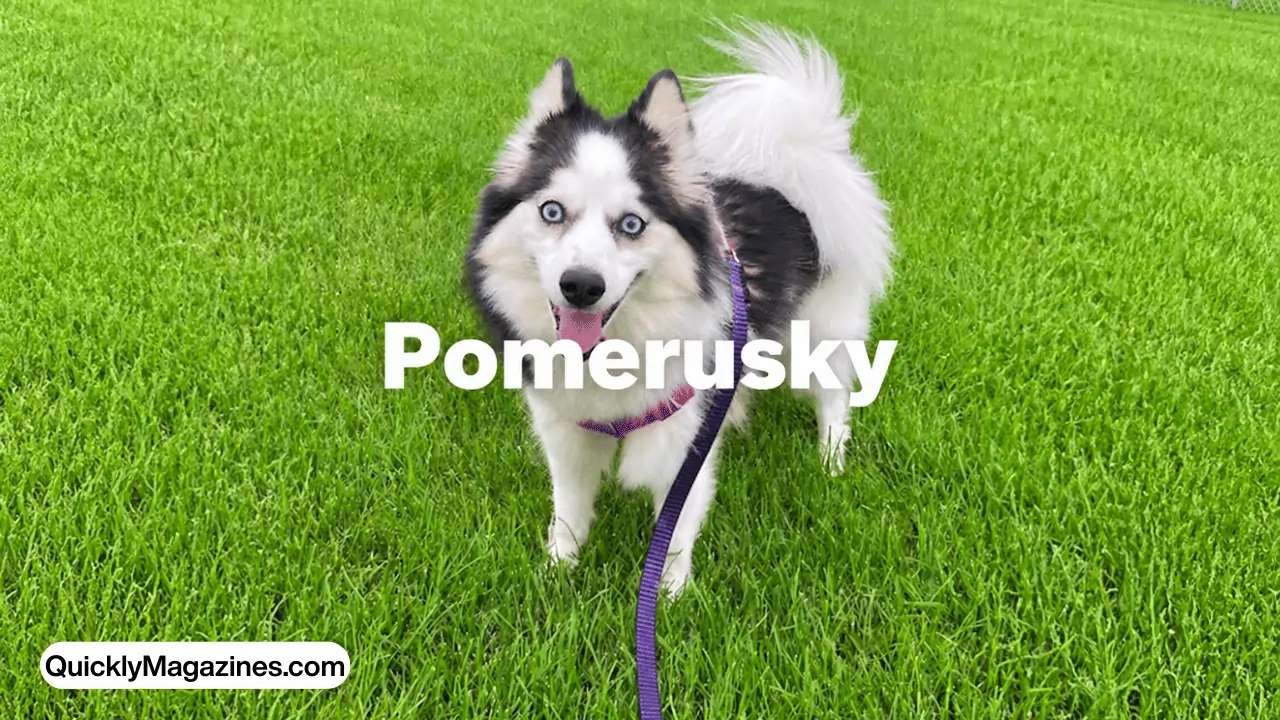
One of the biggest reasons behind the popularity of the pomerusky is its appearance. These dogs often resemble miniature Huskies with fluffy coats and compact bodies.
Coat and Fur
The pomerusky usually has a thick double coat inherited from both parent breeds. Their fur is soft, dense, and fluffy, especially during colder seasons.
Common coat colors include:
- Black and white
- Gray and white
- Brown
- Cream
- Red
- Sable
Eye Color
Many pomerusky dogs inherit striking blue eyes from the Husky side, while others may have brown or mixed-colored eyes. Some dogs even develop heterochromia, where each eye has a different color.
Body Size
The size of a pomerusky can vary depending on genetics. Most dogs remain small to medium in size, making them suitable for homes with limited space.
Average size:
- Height: 10 to 15 inches
- Weight: 15 to 30 pounds
Pomerusky Personality and Temperament
The pomerusky is known for having a friendly and entertaining personality. These dogs love human interaction and enjoy spending time with family members.
Intelligent and Alert Nature
Since both parent breeds are intelligent, the pomerusky learns quickly and stays alert to its surroundings. They enjoy mental stimulation and interactive activities.
Playful Behavior
A pomerusky is naturally playful and energetic. These dogs enjoy running, chasing toys, and participating in family activities. Their playful personality makes them ideal companions for active households.
Loyalty and Affection
Most pomerusky dogs form strong bonds with their owners. They enjoy attention and often seek affection from family members. Proper socialization helps them become comfortable around children and guests.
Stubborn Traits
Some pomerusky dogs may inherit the stubborn nature of the Husky. Consistent training and patience are important to maintain good behavior.
Training a Pomerusky
Training is important for every pomerusky because these dogs are intelligent but sometimes independent.
Early Socialization
Introducing a pomerusky to different environments, people, and pets at an early age helps improve confidence and behavior.
Positive Reinforcement
Reward-based training works best for this breed. Treats, praise, and encouragement help the dog learn commands faster.
Basic Commands
A pomerusky should learn:
- Sit
- Stay
- Come
- Leash walking
- House training
Short training sessions are usually more effective because these dogs can lose focus during long lessons.
Exercise Needs of a Pomerusky
Even though the pomerusky is smaller than a Husky, it still requires daily exercise to stay healthy and active.
Daily Physical Activity
A healthy pomerusky needs:
- Daily walks
- Indoor games
- Outdoor playtime
- Mental challenges
Without enough activity, boredom may lead to excessive barking or destructive behavior.
Apartment Living
The pomerusky can adapt to apartment life if owners provide enough exercise and attention every day.
Grooming and Maintenance
The thick coat of a pomerusky requires regular grooming throughout the year.
Brushing
Brushing several times a week helps remove loose fur and prevents matting. During seasonal shedding periods, daily brushing may be necessary.
Bathing
Bathing should only be done when needed to avoid drying out the skin and coat.
Nail and Dental Care
Owners should regularly:
- Trim nails
- Clean ears
- Brush teeth
Good grooming habits help maintain the overall health of a pomerusky.
Common Health Problems in Pomerusky Dogs
Like many mixed breeds, the pomerusky may inherit certain health conditions from its parent breeds.
Hip Dysplasia
This condition affects joint movement and may cause discomfort in some dogs.
Eye Problems
Some pomerusky dogs may develop eye-related issues as they age.
Dental Issues
Small breeds often face dental problems if oral hygiene is ignored.
Skin Allergies
Sensitive skin and allergies may occur due to environmental factors or diet.
Routine veterinary checkups help detect health issues early and maintain a healthy lifestyle.
Best Diet for a Pomerusky
A balanced diet is important for maintaining the energy and coat quality of a pomerusky.
Healthy Nutrition Tips
Owners should provide:
- High-quality dog food
- Protein-rich meals
- Fresh water daily
- Controlled portion sizes
Overfeeding should be avoided because smaller dogs can gain weight quickly.
Is a Pomerusky Good for Families?
The pomerusky is generally a good family dog when properly trained and socialized.
Good With Children
These dogs enjoy playing and interacting with family members. Supervision is recommended around very young children.
Compatibility With Other Pets
A pomerusky can live peacefully with other pets if introduced properly from an early age.
Attention Needs
This breed enjoys companionship and may not like being left alone for long periods.
Pros and Cons of Owning a Pomerusky
Pros
- Attractive appearance
- Intelligent personality
- Loyal companion
- Suitable for smaller homes
- Energetic and playful
Cons
- Heavy shedding
- Requires regular grooming
- Can be stubborn during training
- Needs daily exercise
- May develop separation anxiety
Conclusion
The pomerusky continues to grow in popularity because of its beautiful appearance, energetic personality, and affectionate nature. This hybrid breed combines the intelligence of a Husky with the compact size of a Pomeranian, making it an appealing choice for many dog lovers.
With proper training, exercise, grooming, and care, a pomerusky can become a loyal and loving companion for years. Families, singles, and active pet owners often enjoy the playful energy and unique charm this breed brings into the home.
FAQs
1. What is a pomerusky?
A pomerusky is a hybrid dog breed created by crossing a Pomeranian with a Siberian Husky.
2. How big does a pomerusky get?
Most pomerusky dogs grow between 10 to 15 inches in height and weigh around 15 to 30 pounds.
3. Does a pomerusky shed a lot?
Yes, the pomerusky has a thick double coat and sheds regularly throughout the year.
4. Is a pomerusky easy to train?
A pomerusky is intelligent and learns quickly, but consistent training is important because the breed can sometimes be stubborn.
5. Can a pomerusky live in an apartment?
Yes, a pomerusky can adapt well to apartment living if it receives daily exercise and attention.
Read More: Wifekivers: Meaning, Modern Relationship Trends and Emotional Support